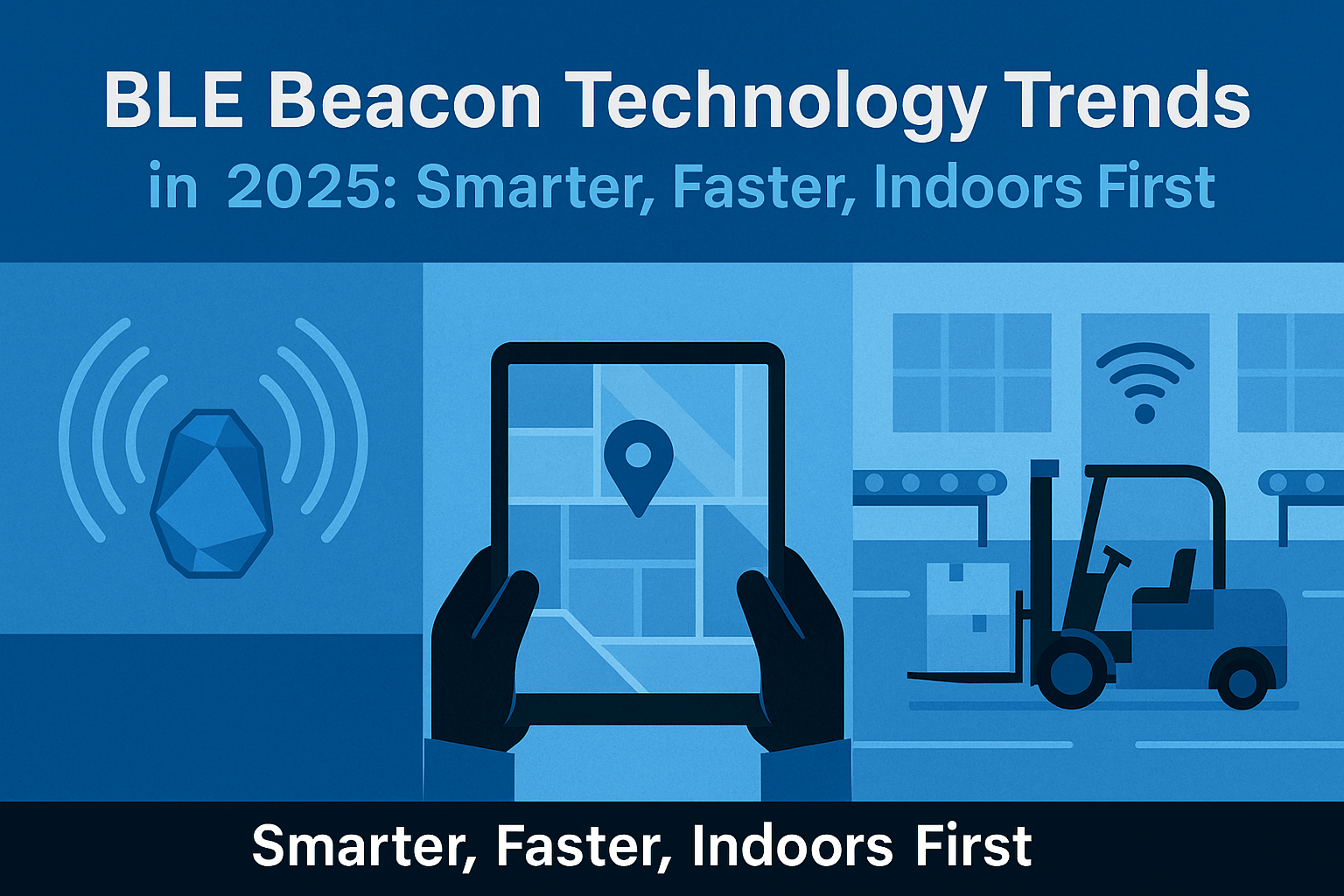
In 2025, BLE beacon technology is a driving force behind smarter, faster, and more connected indoor tracking systems. As businesses adopt smart factory solutions and embrace Industry 4.0, the limitations of traditional GPS and manual tracking are being replaced by BLE-powered indoor positioning systems. From forklift tracking to asset visibility and AI analytics, BLE beacons are powering intelligent logistics at scale.
What Are BLE Beacons?
Bluetooth Low Energy (BLE) beacons are compact wireless devices that broadcast signals at regular intervals. These signals are picked up by BLE gateways and converted into precise location data. BLE technology is known for its low power usage, extended battery life (3–4 years), and seamless integration into real-time location systems (RTLS).
Top BLE Beacon Technology Trends in 2025
- BLE 5.4 with Angle of Arrival (AoA) improves location accuracy to below 1 meter, ideal for indoor asset tracking.
- AI dashboards for BLE tracking provide analytics on vehicle usage, idle time, route history, and safety violations.
- BLE + Edge Computing enables real-time decisions locally without latency from cloud dependence.
- BLE Mesh Networks offer scalable, self-healing signal coverage across large campuses and warehouses.
- Rugged BLE tags are waterproof, shockproof, and suitable for metal-heavy or hazardous environments.
- Natural language interfaces allow queries like “Show idle assets in Zone C” or “Generate weekly forklift report.”
- Wearable BLE tags track personnel while vehicle-mounted tags enable fleet behavior monitoring.
- Real-time zone alerts prevent unauthorized access or unsafe speed in restricted industrial areas.
Why GPS Fails Indoors (And BLE Wins)
- GPS signals degrade in metal-rich or concrete-heavy environments like factories and warehouses.
- BLE beacons offer room-level precision without requiring satellite signals or outdoor line-of-sight.
- BLE infrastructure is easy to install and cost-effective to maintain over multi-year deployments.
BLE Tracking System Use Cases
- Smart factory forklift tracking for real-time movement, idle time, and zone-based alerts.
- Employee safety tracking with wearable BLE tags for personnel movement and hazard detection.
- Hospital asset tracking for beds, wheelchairs, and devices across departments with precision.
- Retail heatmaps using BLE to understand customer flow and shelf engagement in real time.
- Airport equipment monitoring for trolleys, stairs, baggage handlers, and cleaning units.
How BLE Works with AI & Edge
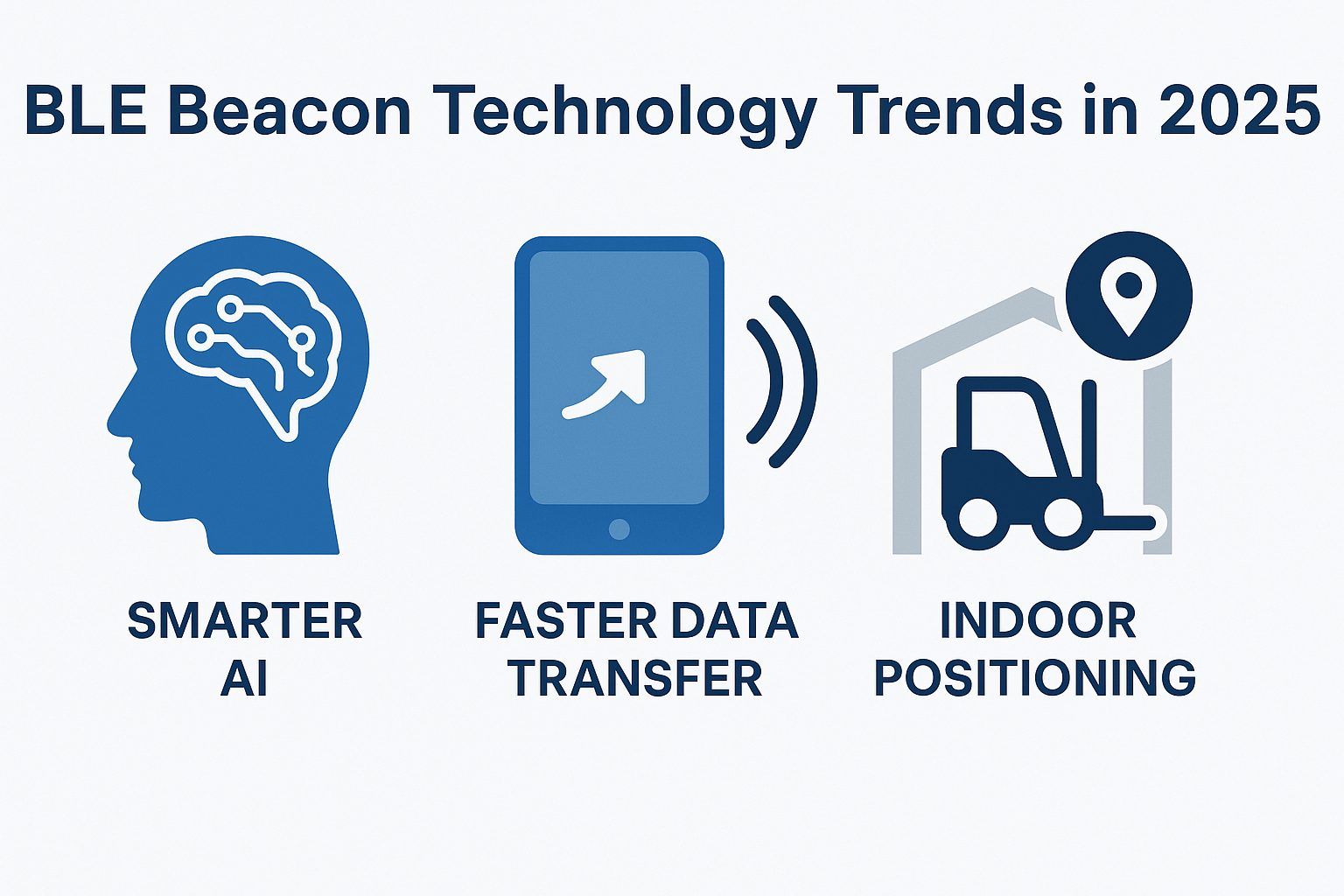
BLE-based systems today are tightly integrated with AI dashboards that use machine learning to detect patterns and anomalies. Meanwhile, edge gateways ensure data is processed instantly at the source. This hybrid setup means faster alerts, less bandwidth usage, and stronger privacy controls.
- AI highlights asset underuse to help optimize operations and reduce idle equipment.
- Shift-based behavior tracking helps measure team performance and equipment abuse or misuse.
- BLE + AI integration supports predictive alerts for maintenance and safety violations.
Key Business Benefits of BLE in 2025
- Indoor precision tracking without relying on costly GPS or wired infrastructure.
- Battery-efficient BLE tags last up to 4 years with minimal maintenance.
- Low-latency alerts for unauthorized zone entry or speeding equipment.
- Data-driven decision making through AI dashboards and analytics reports.
- Compliance-ready visibility with exportable movement logs and zone audit trails.
Conclusion
BLE beacon technology in 2025 is far more than wireless location pings—it’s the foundation of modern indoor logistics. Whether you’re tracking forklifts, managing multi-shift operations, or building a smart hospital, BLE integrates real-time location data, AI insights, and edge processing. It’s affordable, accurate, and ready for scalable deployment across industries.

