In 2026, BLE beacon technology helps businesses improve indoor asset tracking, warehouse visibility, and factory operations. As companies invest in smart factory solutions and Industrial IoT, Bluetooth-based tracking provides an alternative where GPS coverage is unreliable. From forklift tracking to workforce visibility and operational analytics, BLE-powered systems turn location data into practical insights.
What Are BLE Beacons?
Bluetooth Low Energy (BLE) beacons are compact wireless devices that broadcast identifiers at configured intervals. BLE gateways or compatible receivers collect these signals, while positioning software estimates proximity, zone presence, or location. These devices support real-time location systems (RTLS) with low power consumption. However, accuracy and battery life depend on the hardware, broadcast settings, gateway placement, and operating environment.
Top BLE Beacon Technology Trends in 2026
- Bluetooth Angle of Arrival (AoA), introduced in Bluetooth 5.1, supports high-accuracy indoor positioning with compatible tags and antenna-array locators. Sub-meter performance depends on installation design and site conditions.
- AI-powered asset tracking dashboards help analyze equipment utilization, idle time, movement history, and unusual operational patterns.
- BLE and edge computing allow gateways to filter location events and run local rules, reducing cloud traffic and supporting faster responses.
- Bluetooth Channel Sounding, introduced in Bluetooth 6.0, enables fine distance measurement between supported devices. It requires compatible hardware and is not an automatic upgrade for existing beacon tags.
- Industrial BLE asset tags offer enclosure options for dust, moisture, and impact resistance. Hazardous locations require devices with appropriate certifications.
- Natural language analytics can make integrated tracking platforms easier to use through questions such as “Which assets were idle in Zone C?” or “Show this week’s forklift utilization.”
- Wearable BLE tags and vehicle-mounted trackers support workforce visibility, equipment monitoring, and shift-based movement analysis.
- Real-time zone alerts notify teams when tracked assets or personnel enter configured areas, supporting access monitoring and operational response.
Why GPS Struggles Indoors and How BLE Tracking Helps
- GPS signals weaken indoors because roofs, concrete walls, and metal structures can block or reflect satellite signals.
- BLE indoor positioning systems use local receivers instead of satellites. Depending on the design, they can provide proximity detection, zone visibility, or more accurate positioning.
- BLE tracking infrastructure can be deployed in stages. Nevertheless, reliable coverage requires a site survey, suitable gateway placement, and testing around machinery and storage racks.
BLE Tracking System Use Cases
- Smart factory forklift tracking helps teams review movement routes, equipment utilization, dwell time, and configured zone events.
- Worker and supervisor tracking uses wearable BLE tags to support zone visibility and movement records, with appropriate access permissions and retention policies.
- Hospital asset tracking helps staff locate tagged wheelchairs, beds, and medical equipment, reducing time spent searching across departments.
- Retail indoor analytics can reveal movement and dwell patterns when compatible devices or tags participate in the tracking system.
- Airport ground equipment tracking supports visibility of tagged trolleys, cleaning units, and other equipment within areas covered by BLE receivers.
How BLE Beacon Technology Works with AI and Edge Computing
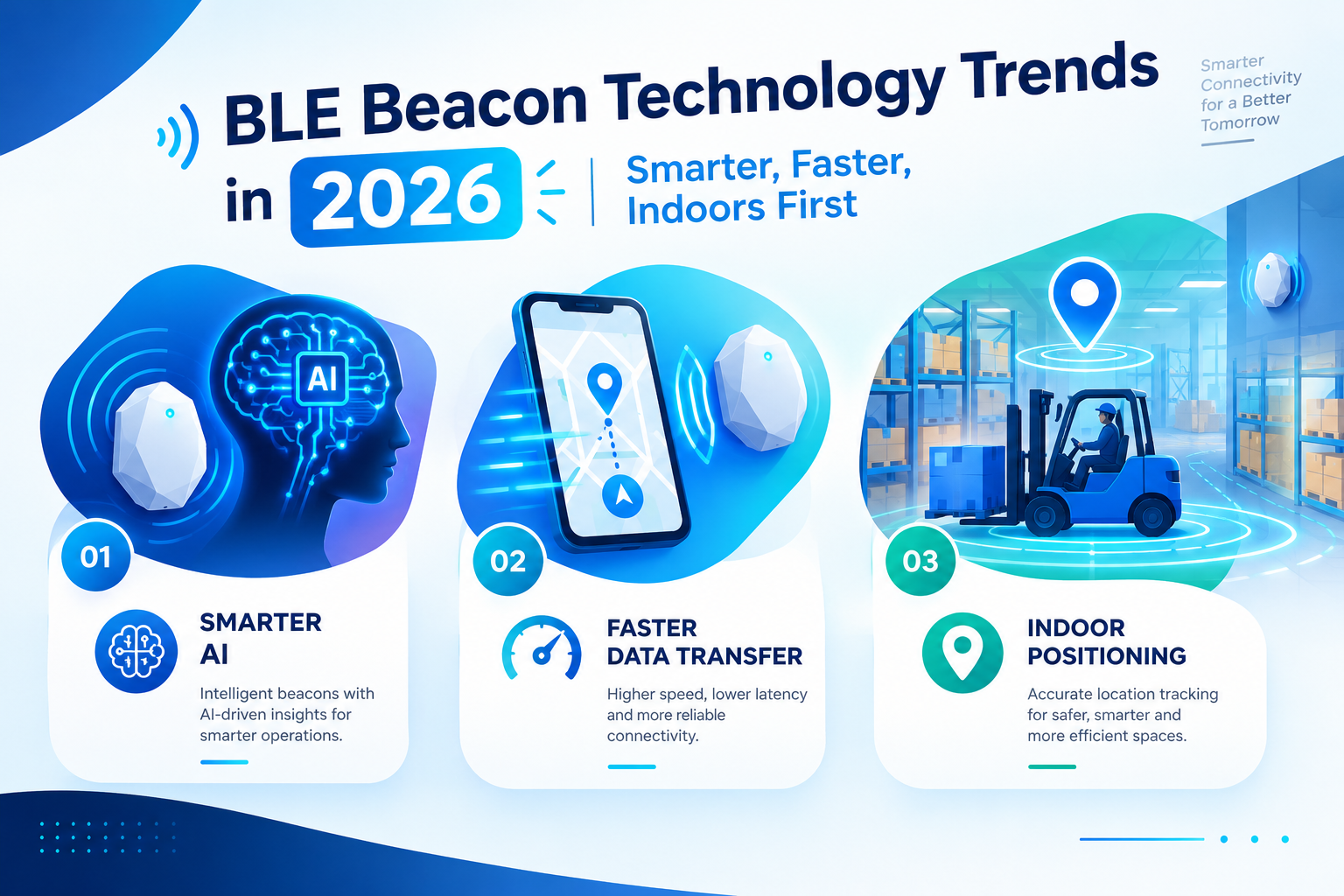
BLE asset tracking systems collect signals through gateways and send observations to positioning software. Next, edge processing can filter duplicate readings, apply zone rules, and forward relevant events to a dashboard. When integrated, AI analytics can identify recurring patterns and unusual activity. This architecture can reduce bandwidth usage and improve response times, although results depend on data quality and system configuration.
- Asset utilization analytics highlight long dwell periods and underused equipment, helping teams make better allocation decisions.
- Shift-based movement reports help identify route inefficiencies, congestion, and workflow bottlenecks across factory or warehouse operations.
- BLE and AI integration can flag unusual movement or utilization patterns. Predictive maintenance also requires relevant condition data, such as vibration, temperature, or machine operating hours.
Key Business Benefits of BLE Beacon Technology in 2026
- Indoor asset visibility helps teams locate equipment and monitor zones where satellite-based tracking is unreliable.
- Battery-efficient BLE tags can support multi-year operation in suitable configurations. Actual battery life varies with transmission frequency, power settings, sensors, and temperature.
- Automated zone notifications help teams respond to unexpected movement or restricted-area entry. Alert timing depends on update intervals and processing delays.
- Data-driven operational decisions become easier through equipment utilization dashboards, movement histories, and scheduled reports.
- Searchable movement records support operational reviews and audits when timestamps, access controls, and data retention are configured appropriately.
Conclusion
BLE beacon technology in 2026 connects indoor location visibility with smarter operational decisions. Whether you need warehouse asset tracking, forklift monitoring, or hospital equipment visibility, the right BLE system can reduce manual searches and reveal workflow inefficiencies. Start by defining your required accuracy, coverage, update frequency, and battery life. Then validate a pilot deployment before expanding your indoor positioning system across the facility.

