
Finding lost items can be frustrating, especially when you need your keys, wallet, phone, or other belongings urgently. Our brain uses attention, memory, and environmental clues to help us remember where we placed things. However, distractions and busy routines can make searching difficult. Discover why we misplace everyday objects, how to find lost items more efficiently, and how QTrace tracking solutions can help locate compatible belongings.
Whether you have misplaced your house keys, forgotten where you left your wallet, or cannot locate your bag, understanding how memory works can make searching easier. Let’s explore surprising brain facts, practical search techniques, and ways technology can help us manage everyday belongings.
Why Finding Lost Items Can Be Difficult

The human brain processes information through an incredibly complex network of neurons. It helps us recognise familiar places, remember experiences, make decisions, and navigate our surroundings. However, having a remarkable memory does not mean that we remember every detail perfectly.
For example, you may remember where you bought your favourite watch several years ago but struggle to recall where you placed your house keys five minutes ago. This happens because remembering an event and remembering the exact location of an object involve different aspects of memory.
Our brains need to connect an object’s identity with its location. When this connection is weak or incomplete, finding the object becomes more difficult. You can learn more in this scientific review of object-location memory.
Therefore, even a powerful brain can struggle to locate everyday belongings, especially when we place them somewhere without paying attention.
Visual Memory and Finding Lost Items
Our brain recognises objects and groups information into meaningful categories. For example, when you enter a room, you may recognise furniture, people, electronic devices, and personal belongings without consciously examining every detail.
However, when you lose something, your brain starts searching for clues related to that object. If you cannot find your wallet, you may think about your bedroom, office desk, bag, car, or the last place where you used it.
This process involves narrowing down possible locations using visual information, past experiences, and contextual clues. You may mentally revisit places you have recently visited or remember what you were doing when you last saw the missing item.
When you need to find lost items, begin by retracing your recent steps and checking the places where you last used them. Then examine nearby surfaces, pockets, bags, and other locations associated with your routine.
How to Find Lost Items Using Realistic Clues

When an item goes missing, we often mentally reconstruct our recent activities. We ask ourselves questions such as, “Where did I last use my phone?” or “Did I leave my keys near the front door?”
Our brain uses these questions to generate possible explanations and guide our attention towards relevant places. However, repeatedly checking the same locations without a clear plan can waste time and increase frustration.
Instead, follow these practical steps to find lost items:
- Recall the last time you definitely saw or used the item.
- Think about the activities you performed immediately afterwards.
- Search one area at a time instead of moving randomly between rooms.
- Check less obvious locations, such as clothing pockets, drawers, bags, and under furniture.
- Consider whether someone else may have moved the item.
- Use a compatible tracking device if the missing item has one attached.
These simple steps help organise your search. Rather than checking every possible place repeatedly, use the information you remember to narrow down the most likely locations.
How Environmental Clues Help Locate Missing Objects
Our surroundings can provide important clues when we are searching for a missing object. Although the brain does not follow the photosynthesis process used by plants, it does use sensory information and environmental cues to help us recognise familiar places and retrieve memories.
For example, entering your office may remind you that you used your headphones near your computer. Seeing your handbag may help you remember that you placed your keys inside it after returning home.
Similarly, familiar sounds, objects, room layouts, and daily routines may help bring a relevant memory to mind. These clues can be useful because memory retrieval often depends on the information available in the surrounding environment.
When searching for a lost item, avoid rushing from one place to another. Pause, recall your recent activities, and use the surrounding clues to guide your next step.
Why We Forget Where We Put Everyday Belongings
Have you ever searched for your phone in the same place where you usually keep it, only to discover that you had left it somewhere else? This is a common experience.
Many misplaced items are not lost because we deliberately put them somewhere unusual. Instead, we may place them down while thinking about another task. Since our attention is elsewhere, we may not form a strong memory of the action or the object’s location.
Later, we remember using the item but cannot recall exactly where we left it. This is one reason why searching can feel surprisingly difficult even when the object was misplaced only a short time ago.
To reduce these situations, create a designated place for frequently used belongings. For instance, keep your keys in a bowl near the entrance and your wallet in the same drawer every day. These habits reduce the need to remember a different location each time.
How Memory Errors Affect Your Search
Our memories are not perfect recordings of everything we experience. Instead, the brain selects, connects, and retrieves information based on attention, context, and other factors.
For example, you might clearly remember leaving home in the morning but have no clear memory of whether you placed your sunglasses in your bag or on the table. You remember the main event, but the small detail about the object’s location is missing.
Research on memory also shows that people can remember an object’s identity while confusing its location with that of another object. Therefore, a confident memory is not always an accurate one.
When you cannot recall where something belongs, try reconstructing the sequence of events rather than relying entirely on your first memory. Check the most likely locations systematically instead of assuming that your recollection must be correct.
Why We Forget Everyday Objects
Have you ever forgotten a birthday, an anniversary, an appointment, or where you placed an important document? Forgetting is a normal part of human memory.
Our brains cannot keep every detail equally accessible at all times. Some information receives more attention, while other details become difficult to retrieve as time passes or new experiences compete for attention.
Forgetting where you placed an object does not necessarily mean that the memory has disappeared permanently. Sometimes, a useful reminder or a familiar context helps you recall the information. In other situations, the location may never have been properly registered because you were distracted when putting the object down.
That is why relying entirely on memory is not always the most practical solution. Establishing routines, using reminders, and choosing suitable tracking tools can help reduce the everyday frustration of misplaced belongings.
How Consistent Habits Help Prevent Lost Items
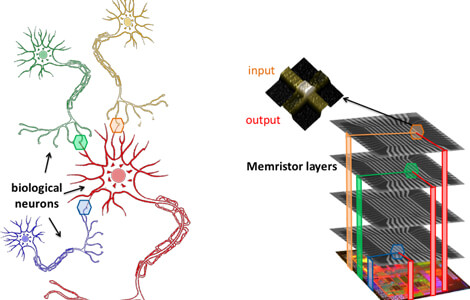
Think about how you study, work, or prepare for your day. You may feel more organised when your desk, chair, books, and other essentials remain in familiar places.
The same principle applies to everyday belongings. When you always place your keys, wallet, glasses, and remote control in designated locations, you develop predictable routines that make them easier to find.
However, changing your routine can disrupt these habits. If you put your keys in a jacket pocket instead of their usual place, you may automatically search the usual location first.
One of the simplest ways to find lost items is to keep frequently used belongings in designated locations at home and work.
- Keep your house and vehicle keys in a designated location.
- Return your wallet and phone to the same place after use.
- Use a small tray or organiser for frequently misplaced objects.
- Avoid placing important belongings on random surfaces while multitasking.
- Attach a compatible tracking device to items you frequently misplace.
Consistency makes your belongings easier to manage and can reduce unnecessary searching.
How Repetition Improves Memory and Recall
There is a reason why familiar routines become easier with practice. Repeating an action in a consistent context can make it more automatic over time.
For example, if you always put your keys in the same bowl after entering your home, you gradually establish a habit. Eventually, returning the keys to that location may require less conscious effort.
However, repetition alone does not guarantee that you will remember every action. Distractions, interruptions, and changes in routine can still lead to mistakes.
A useful technique is to say the action aloud when placing an important item somewhere unusual. For example, you might say, “I am putting my office keys in the front pocket of my backpack.” This can help you pay attention to the action and create a more distinctive memory.
You can also combine good habits with practical technology. A tracking device may provide an additional way to locate a compatible item when your memory is not enough.
Understanding the Brain’s Memory Capacity

The human brain can retain a remarkable range of information, but it does not work like a computer hard drive with a simple, fixed storage capacity. Its memory systems involve complex networks that encode, maintain, update, and retrieve information.
Forgetting can occur for several reasons, including weak initial attention, interference from other information, and difficulty retrieving a memory. It is therefore inaccurate to assume that every forgotten detail has been permanently erased or that old memories are routinely replaced by new neurons.
Consider a practical example. You may remember an important meeting because you paid attention to it, discussed it several times, and added it to your calendar. However, you may forget where you placed a small object because you put it down while thinking about something else.
The difference is often related to how the information was noticed and encoded, rather than simply how much information the brain can store.
Research into object-location memory and forgetting also highlights how the connection between an object and its location can become unreliable over time.
The lesson is simple: even when our memory works well, external reminders and consistent routines can help us manage everyday tasks more efficiently.
How QTrace Helps You Find Lost Items
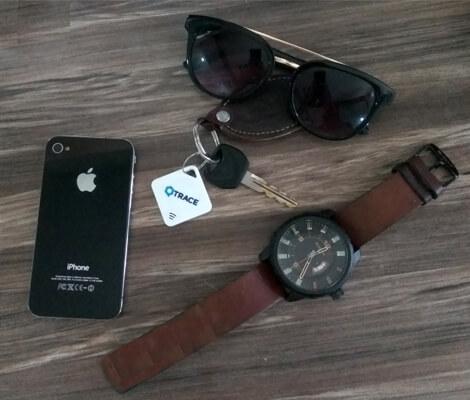
Misplacing your belongings can interrupt your work, delay your plans, and create unnecessary stress. Fortunately, you do not have to rely on memory alone to manage every item you own.
QTrace offers a practical approach to finding compatible, tagged belongings when they go missing. Depending on the device model and supported features, an item tracker may help you locate your keys, bag, or other everyday essentials through a compatible phone or tracking system.
Technology can also help you find lost items when a compatible tracking device is attached to your keys, bag, or other belongings.
Before choosing a tracker, check its supported finding range, connectivity requirements, battery life, compatibility, and available features. Tracking capabilities can vary by device and environment, so it is important to understand what your particular model supports.
By combining consistent habits with an appropriate tracking device, you can spend less time searching and more time on the things that matter.
Explore the QTrace website to learn more about available tracking solutions for everyday belongings.
Final Tips for Finding Lost Items Faster
Our brains are powerful, but attention and memory are not perfect. Misplacing an object is often the result of a brief distraction, an interrupted routine, or difficulty recalling where we placed it.
By building consistent habits, searching systematically, and using suitable tracking technology, we can make finding everyday belongings easier and less stressful.
Goal of QTrace: Help people save time and reduce the frustration of searching for misplaced belongings in everyday life.
Ready to spend less time searching? Visit QTrace to explore its available tracking solutions.

